I had started my golf career at Pebble Beach Resorts in 1995. My mentality was to be the guy they had to promote when opportunities happened. Through a combination of luck and hard work, I had earned the First Assistant Professional/Caddie Master position at Pebble Beach Golf Links in late 1999. That meant if I didn’t do anything foolish, I’d be a key person for the first United States Open in the new millennia. Pebble Beach had a long history of crowning the best players in the world when it hosted major championships. And in 2000, Tiger Woods was head and shoulders above everyone else. Looking back now, the 2000 US Open was the beginning of the Tiger Era, where it’s hard to argue he played the greatest golf in the history of the sport over the next 2-3 years.
A couple weeks before the championship, a local television station had run a series of “Golf Tips” by the professionals at Pebble Beach. I did a segment on how to play out of the rough, and I was able to advance the ball about 150 yards out of a thick lie while the camera was rolling. I went back out to the same place (left of 13th fairway) the week of the tournament and could not move the ball more than 50 yards. While the rough was perhaps only one inch longer, it was 25x thicker and almost impossible to get the club to the back of the ball.
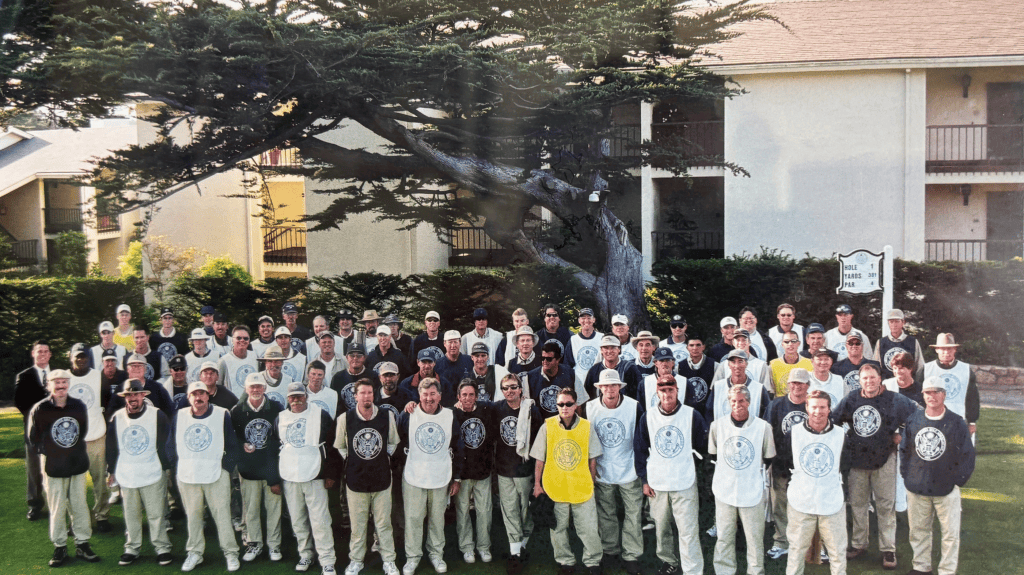
Other things that happened that week were a massive corporate event where I needed our entire caddie program locked in for a Wednesday shotgun. I was also had a role on the Championship Team as a Chairman of Future Sites. But I still had time to make my way to the practice areas that Wednesday to watch some of the warm ups.
I started at the Pebble Beach range, where my attention was pulled towards a massive guy on the far right side of the deck hitting towering long irons to the 235 post. But the 235 was more like 250 because it was on the left side of the field. Basically, it was like watching a quarterback make deep warm up throws from the right hash to the left corner of the end zone. I had a sideline pass, so I worked my way over there for a closer look. It was Ernie Els, a multiple Major Champion and at the time, World #3. He’d finished second at The Masters a few months earlier and this man was putting on a clinic. When you’re next to the best in the world, it’s like watching a different sport. First, the sound of impact is hard to describe. Second is the effortless speed and height of the ball. Ernie was legitimately hitting 3-irons the height of a pitching wedge. Finally, the shape of the shot is totally unique. It initially draws from right to left, then lifts to its apex, and then falls to the right. I call it a “draw-fade” and I’ve only seen a few guys do it. One of them is my mortal enemy, Vijay Singh, but that’s a blog for another day.
I walked off the range convinced no one was going to beat the exhibition I had just witnessed by the South African. But thanks to my friends over at Spyglass Hill, I got a call that Tiger was on his way over to their range for privacy. Tiger, you can hide from the public, but you can’t hide from me. I hopped in my cart and headed over for a front row seat.
Tiger hit balls for an hour and did not miss a single shot. His trajectory was higher and straighter than Ernie’s which is still hard for me to believe. He also had to aim his driver from the right side of the deck towards the 7th tee at Spyglass because he was flying his drives onto the 8th green. I estimated that as a 330 yard carry, which is commonplace now. But in 2000, there were only a few dudes hitting it over 280 yards. Butch Harmon was his instructor at that time and if Tiger had just stayed with him for his entire career, I’m convinced Tiger would have 30 or more major wins. But after what I watched that day, I’ve always thought that Tiger was so good he got bored. Part of me believes his coach and swing changes over the next decade were just to make the game a worthwhile challenge for him.
At the end of the greatest warm-up I’d ever seen, Butch suggested a small wager. This was a tactic he commonly used to keep Tiger engaged during a practice session. Today’s bet was that Tiger could not hole out a 75 yard wedge shot in 5 attempts. He made the third one. That was enough for me. I announced to the small group around me that Tiger Woods was going to win the 2000 United States Open.
Most of you know what happened. Tiger won by 15 shots, which is the largest margin of victory in modern history. But most people don’t remember who was in the last group with Tiger on Sunday and finished tied for 2nd. That man was Ernie Els. So, while I’ve never played the game at a world-class level, I am proud I was able to recognize world-class golf. It’s been over 26 years since that Wednesday, and I still consider watching these two men strike a golf ball in their primes as one of the best sports experiences of my life.
One final observation. You remember my golf tip on how to hit out of the rough and my experience trying to do it during tournament week? In my opinion, the greatest shot Tiger Woods’ ever hit was out of the right rough to the green on the 6th hole in round #2. It was a 7-iron from 205 yards, over a tree which has since been lost to the sea, onto the par-5 green. Roger Maltbie, the walking announcer, famously said, “it’s not a fair fight.”
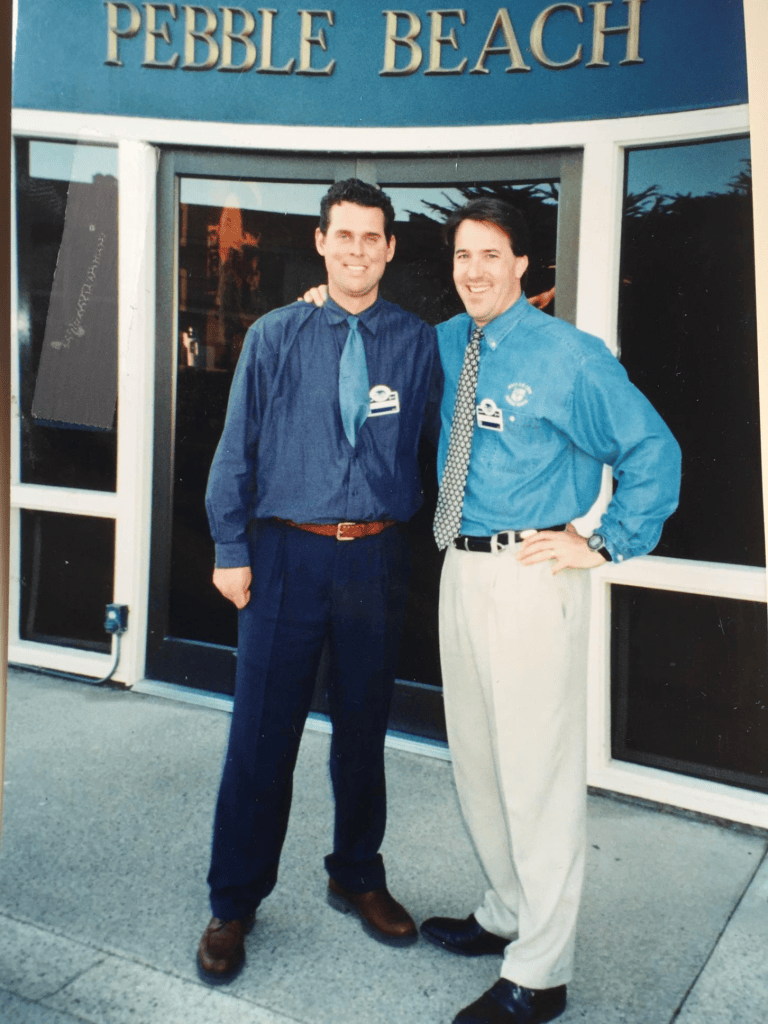
Me (on left) with Head Professional, Chuck Dunbar, in 2000.
Me (second row far left) with the Pebble Beach Caddie Crew in 2000.